
Research Expeditions Program
Ocean Exploration for Conservation and Impact
Bridging the ocean science data gap.
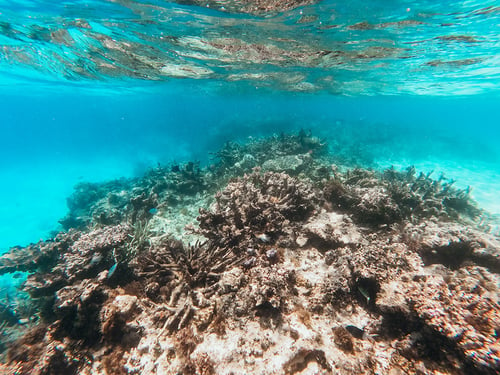
Our oceans and their biodiversity are under threat by human-led activities like pollution, overfishing, industrial and agricultural runoff, development and climate change.
While researchers and scientists around the world work tirelessly to address these challenges, a significant challenge remains: We cannot protect what we do not understand.
We need more scientific data, and we need it urgently.
Small Vessel. BIG Impact.
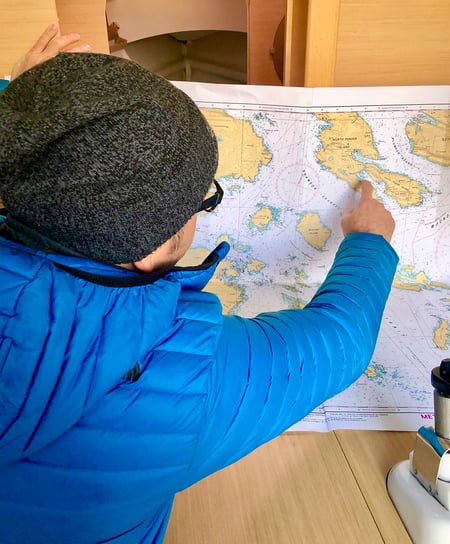
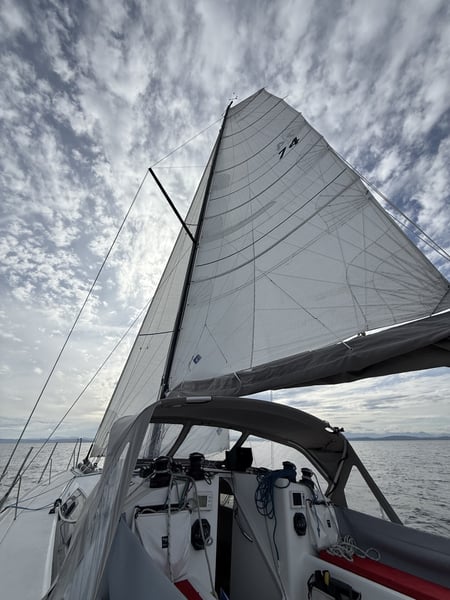
Ocean Diagnostics’ Research Expeditions Program brings scientists and early career ocean professionals out to sea onboard a low-emissions sailing vessel, Biosis.
Providing a boat, cutting-edge technology and training, together we collect scientific data on microplastic pollution and biodiversity loss.
As part of our larger Impact Initiative, the Research Expeditions Program helps to fill scientific data gaps and inform conservation measures.
The Challenge
Humans rely on our oceans for oxygen, food, economic prosperity, cultural preservation and climate regulation. But human-led activities have led to the degradation of our oceans and their biodiversity.
Our oceans are threatened by pollution, coastal development, overfishing and climate change.
While the United Nations Decade for Ocean Science aims to safeguard our oceans by generating the scientific data needed to inform policies and solutions, collecting this data is currently very challenging.
Technology as a Bridge, Not a Barrier
Ocean Diagnostics was born from the hearts and minds of divers, sailors, marine scientists and engineers who share a passion for exploring and protecting our oceans, and who had experienced first-hand the challenges of collecting scientific data in the ocean.
Our mission is to develop innovative and enabling technology to generate the reliable scientific data on ocean health needed to inform solutions at the local, regional and international level. Our Research Expeditions use this technology to collect reliable scientific data.
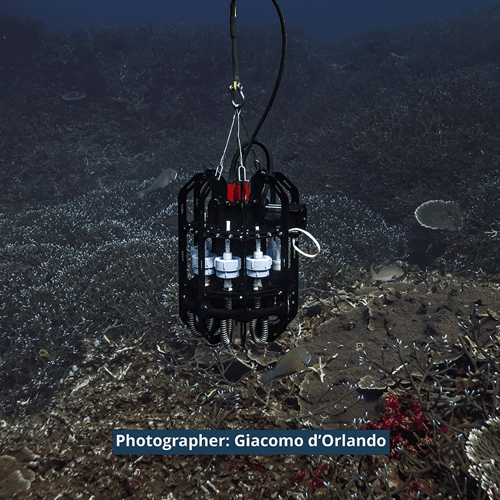
Our automated depth sampler collects filtered microplastics or environmental DNA (eDNA) samples down to 400 meter depths.
-1.png?width=500&height=500&name=OceanDiagnotics_eDNA_SurfaceSampler-15(weB)-1.png "The hand-held eDNA Surface Sampler sits on top of its open black carrying case at a forest stream")
Our surface samplers collect filtered eDNA from surface water, particularly in remote areas.
Current Expeditions
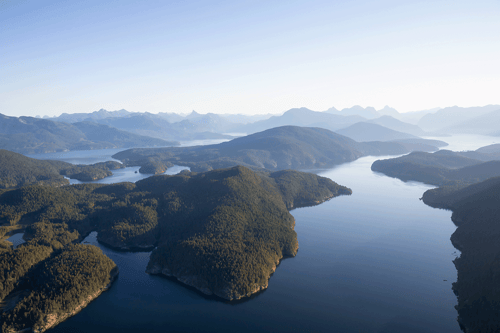
Mapping Invasive Species in the Great Bear Sea
Summer 2026
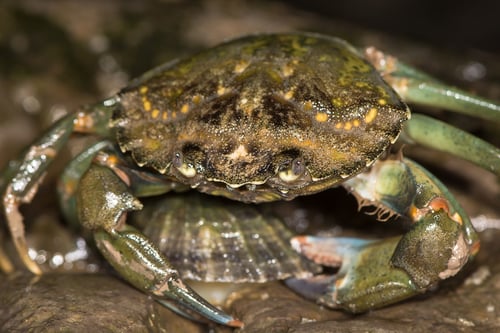
Deploying environmental DNA sampling technology to detect and map invasive green crabs and tunicates.
Supporting The Ocean Decade
As part of our larger Impact Initiative, Ocean Diagnostics’ Research Expeditions address three key challenges outlined in the United Nations’ Decade of Ocean Science for Sustainable Development::
Challenge 1:
Understand and tackle marine pollution
Mapping marine microplastic pollution and its impacts on ocean ecosystems to develop solutions to mitigate them.
Challenge 2:
Protect and restore ecosystems and biodiversity
Understand the effects of multiple stressors on ocean ecosystems, and develop solutions to monitor, protect, manage and restore ecosystems and their biodiversity under changing environmental, social and climate conditions.
Challenge 9:
Skills, knowledge, technology and participation for all
Ensure comprehensive capacity development and equitable access to data, information, knowledge and technology across all aspects of ocean science and for all stakeholders.