
Ocean Diagnostics’ eDNA Surface Sampler is helping scientists detects white shark presence along the California coast.
As a recreational snorkeler and scuba diver in California, Stanford PhD student Raksha Doddabele has a healthy mix of fear and fascination for white sharks. Their stealthy attack from behind and beneath involves a forceful bite that inspires horror movies like Jaws, but fear is often rooted in a lack of understanding.
Through the Monterey Bay White Sharks project at Stanford University’s Hopkins Marine Station’s Block Lab, Doddabele is on a mission to demystify white shark behaviours using Ocean Diagnostics' environmental DNA (eDNA) sampling technology. With the ability to detect white sharks in specific areas at specific times, eDNA could increase our understanding of the species and reduce uncertainty about their presence.
“I was drawn to eDNA about six years ago. I had some experiences with wildlife conservation, and I just felt like we're messing with nature too much and that conservation shouldn’t always require over handling animals. eDNA is completely non-invasive. You don't have to interact or see the animal at all to learn about their presence and movement,” Doddabele shared.
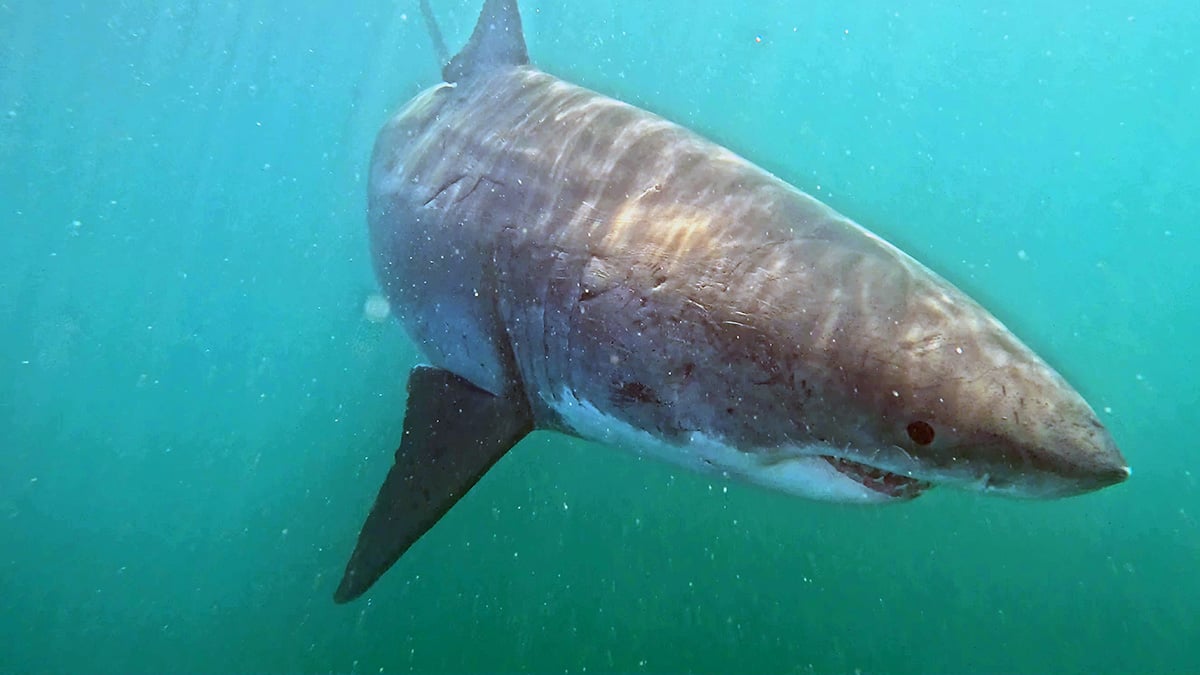
White sharks are a top predator along the California coast. While bites are rare, averaging less than two a year, human encounters can be serious. Despite garnering a reputation as a public safety threat, the species is essential for regulating ecosystem food webs. But, white sharks are vulnerable to overfishing and habitat loss.
By collecting and analyzing the genetic material left in the water by the sharks, scientists can detect the species’ presence, uncover migration patterns and potentially evaluate the reasons behind their movement along the California coast. Routinely monitoring public recreation areas could better inform beachgoers about real-life Jaws encounters.
The Block Lab has monitored white sharks at Año Nuevo, a site north of Monterey Bay, for over 20 years using tagging technologies. eDNA was added to the lab’s toolkit in the past few years and has detected white sharks at sites across 95 miles of the California coast, from Monterey Bay to Piedras Blancas. For a long time, it was believed that sharks move solely to follow prey, but their migrations up and down the California coast and offshore into the Pacific Ocean suggest prey availability is not the only motivator of white shark movement.
Piedras Blancas is home to elephant seals and is an emerging white shark aggregation site, with visitations from white sharks tagged in Monterey Bay. Detection of white sharks here shows that their behaviour is not solely driven by food.
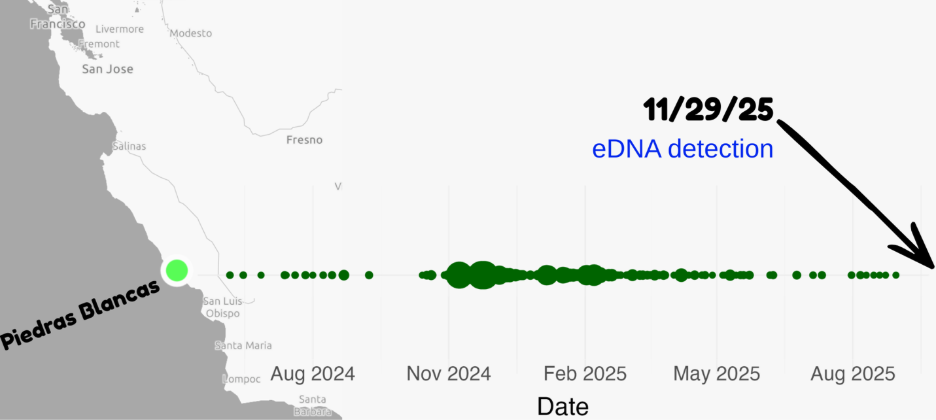
This plot shows a year of acoustic detections of tagged sharks at a newer site for the Block Lab, Piedras Blancas.
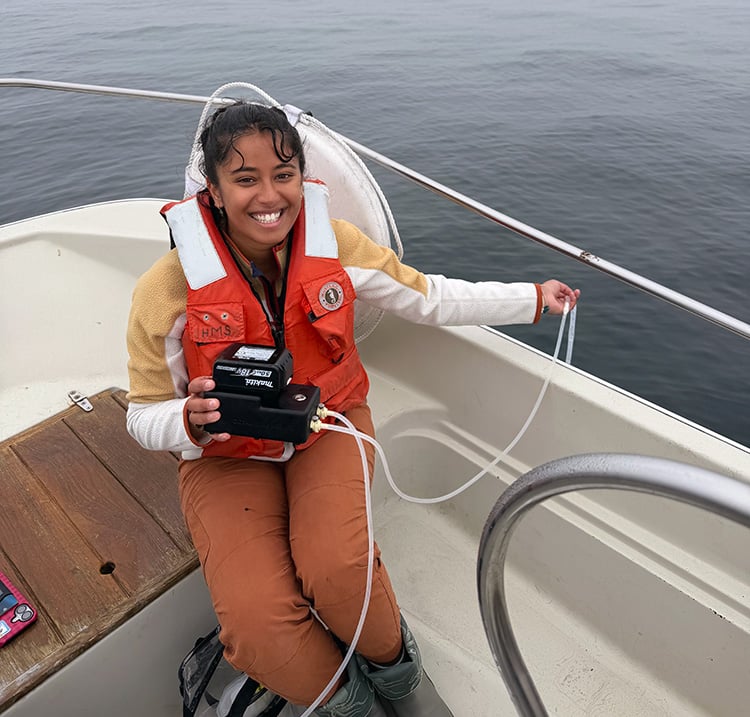
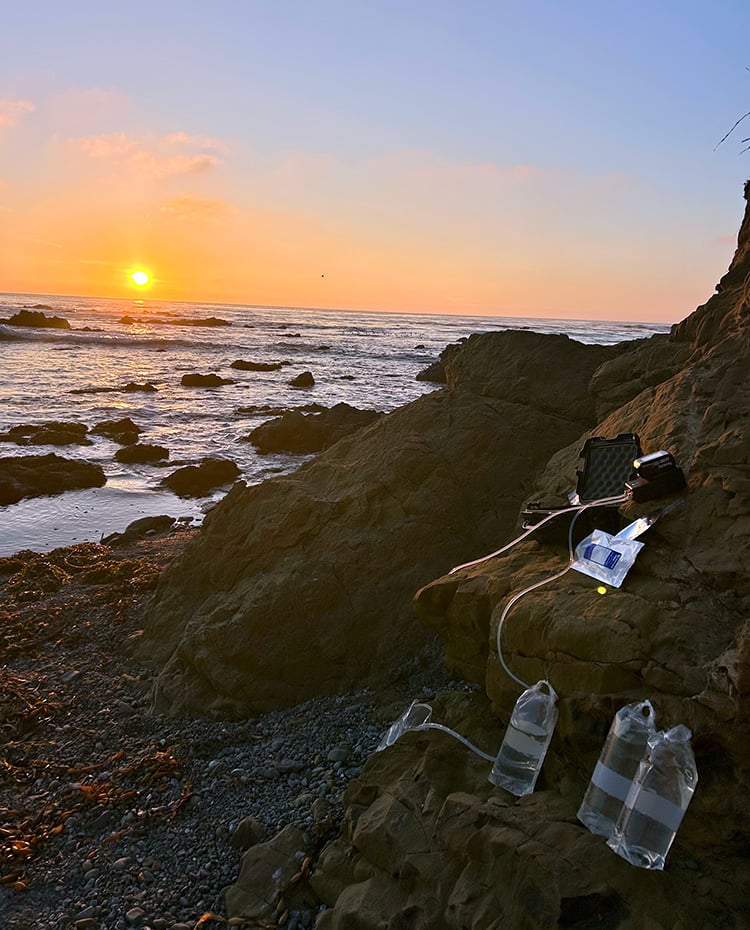
The eDNA Surface Sampler enables more data collection in less time than finding wild sharks to sample and tag. Using the small, portable tool, Doddabele collected filtered eDNA from a long tube attached to a small vacuum pump from the safety of a boat. Previous methods required her to fill sterile bags with water, then filter the water back in a lab in preparation for DNA extraction.
eDNA degrades within 24-48 hours, so the bags also had to be put on ice for transport. With the eDNA Surface Sampler, the small filters are the only items that go to the lab. It also improved sample collection efficiency, reduced sample contamination risks and increased the amount of white shark DNA detected, demonstrating the sensitivity and utility of new technology.
Doddabele illustrated, "In the soup of the eDNA of all organisms in the water, the white shark is very rare. We had to take so much more water to maximize our chances of finding it. This is heavy to haul back to shore. With the Sampler, it's way easier to transport and better for preventing contamination and degradation of the eDNA.”
With easier access to more field data, Doddebele has more time to develop an eDNA analysis method for estimating white shark abundance from specific sites using a genomic panel for sequencing their DNA. This advancement is at the very cusp of what eDNA can do. If successful, the method could be used by other groups globally to monitor white shark populations, especially in regions where sharks are more endangered.
"A lot of fear comes from a lack of knowledge of what the white sharks are doing. Our goal is to develop an eDNA method to estimate the number of white sharks at specific sites. Basically, the more genetic variation you get back corresponds to a greater number of sharks in the area,” she explained.
According to the State of California’s Department of Fish and Wildlife, there have been 250 shark attacks in California, the vast majority of which involve white sharks and 20 of those being fatal. Genetics technology could be the key to unlocking a more harmonious relationship between these fascinating creatures and humans.
Doddabele said, “eDNA could help us to answer the question, ‘If I surf at this beach today, is there a white shark around?”
Subscribe below for more stories and technology updates.
Introduce the eDNA Surface Sampler to your biodiversity work. >
...
Ocean Diagnostics is a Canadian environmental impact company that advances freshwater and marine science with innovative technologies for monitoring microplastic pollution and biodiversity loss. Founded in 2018 by scientists and engineers, the company now collaborates with governments, researchers, conservation organizations and marine industries around the world to generate the data needed to inform decision making.